Performance Lab
0%

Choosing a Continuous Glucose Monitor in 2026 means comparing more than a sensor’s size. App design, alert settings, wear time, and compatibility can shape everyday use. One device may suit someone who wants quiet overnight tracking; another may work better for a person who values simple setup. Fit is personal.

Endocrinologist Dr. Irl Hirsch has described continuous glucose monitoring as “the most important advance in diabetes care since the discovery of insulin.” That perspective helps explain why these devices matter: they show glucose patterns between finger-stick checks, not just isolated readings. Still, no sensor removes uncertainty. Readings can lag behind blood glucose, and performance may vary with use and individual circumstances.

This guide compares 10 leading options using practical criteria, including wear duration, warm-up time, alarms, phone compatibility, and data sharing. It also considers how clearly each product explains its limitations. Availability, approved uses, and insurance coverage can differ by country and person, so check current product labeling and discuss choices with a qualified healthcare professional. A feature-rich screen can look reassuring, but it does not guarantee the best experience. Even this comparison has limits: preferences, skin comfort, and daily routines are hard to reduce to a score. That matters. The aim is a useful starting point, not a substitute for individual medical advice.
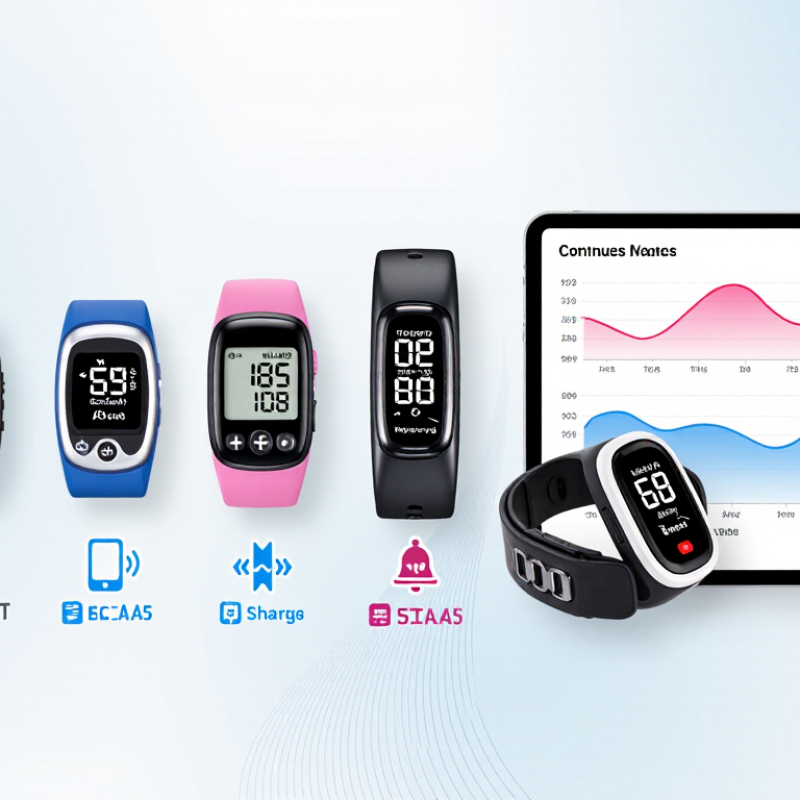
10 Best Continuous Glucose Monitors in 2026

How Continuous Glucose Monitors Track Glucose Levels

A continuous glucose monitor tracks glucose through interstitial fluid beneath the skin, not directly from blood. A small sensor filament rests in this fluid for several days. An enzyme-coated surface reacts with glucose and creates a tiny electrical signal. The monitor converts that signal into an estimated glucose reading. A transmitter then sends the data to a compatible display or mobile application.

The reading updates at regular intervals, often every few minutes. This creates a moving picture of glucose changes after meals, exercise, stress, or sleep. However, interstitial glucose can trail blood glucose by several minutes. Rapid changes may therefore appear later than expected. The graph may show a gentle rise after a sweet breakfast, followed by a sharper peak during digestion. Alerts can identify low or high trends before noticeable symptoms develop. They are useful, but not flawless.

Sweat, pressure on the sensor, loose placement, or a damaged filament can affect results. Some systems require calibration, while others arrive factory calibrated. When a reading conflicts with symptoms, a clinician may recommend a blood glucose check. One number should not control a treatment decision without proper medical guidance. Sensor data also needs context. A late-night rise may reflect food, illness, medication, or ordinary variation. Reviewing repeated patterns with a qualified healthcare professional is more reliable than reacting to one unusual point.

Criteria for Evaluating Continuous Glucose Monitors in 2026

When evaluating the 10 best continuous glucose monitors in 2026, accuracy should lead the review, but it should not stand alone. The ADA Standards of Care in Diabetes—2025 supports CGM use for many people using insulin and emphasizes actionable glucose data. Compare mean absolute relative difference, or MARD, alongside real-world performance. A low MARD looks impressive, yet accuracy may change during rapid glucose rises, exercise, dehydration, or sensor replacement. The 2019 International Consensus on Time in Range recommends that many adults spend at least 70% of time between 70 and 180 mg/dL. That target helps translate technical data into daily decisions.

Usability deserves equal weight. Assess wear duration, warm-up time, adhesive comfort, alarm clarity, calibration needs, and data-sharing controls. A useful system should display trends quickly, including arrows before a low occurs. Interoperability also matters; compatible insulin delivery and health-record systems can reduce manual entry. The ADA report notes that personal preferences, cost, training, and access strongly influence sustained use. That point is easy to overlook. A technically excellent monitor can still fail in a humid gym or during a busy night shift.

Tips: Check independent clinical evidence, not only laboratory claims. Ask whether performance data include children, older adults, darker skin tones, and different glucose ranges. Keep a backup testing method when symptoms conflict with readings, because no sensor is perfect. I would also score privacy policies and customer support, although these factors are harder to measure consistently. Recheck prices, reimbursement rules, and software features in 2026; they can change faster than published reviews.

10 Best Continuous Glucose Monitors in 2026 - Criteria for Evaluating Continuous Glucose Monitors in 2026

Rank Evaluation Criterion Recommended 2026 Benchmark Suggested Weight Why It Matters
1 Accuracy Mean absolute relative difference (MARD) of approximately 10% or lower, supported by independent clinical validation 25% Higher accuracy improves treatment decisions and reduces unnecessary confirmation checks.
2 Wear Duration At least 10 days of continuous wear, with stable performance throughout the approved wear period 12% Longer wear reduces replacement frequency, skin disruption, and ongoing costs.
3 Warm-Up Time Two hours or less before the first dependable glucose reading 8% Shorter warm-up periods minimize data gaps when replacing a sensor.
4 Calibration Requirements No routine finger-stick calibration, with clear instructions for confirming unexpected readings 8% Calibration-free operation improves convenience while preserving safe-use guidance.
5 Glucose Update Frequency Automatic readings at least every five minutes, with trend arrows and historical graphs 10% Frequent updates help users identify rapid changes and recurring glucose patterns.
6 Alerts and Customization Low, high, urgent-low, rate-of-change, and signal-loss alerts with adjustable thresholds 10% Customizable alarms support individualized glucose targets and safety needs.
7 Data Connectivity Reliable Bluetooth communication, automatic cloud backup, and compatibility with major mobile operating systems 8% Stable connectivity supports real-time monitoring and reduces missing data.
8 Data Sharing and Reporting Secure caregiver sharing, downloadable reports, time-in-range analysis, and at least 14 days of stored data 7% Clear reports help users and clinicians evaluate patterns rather than isolated readings.
9 Comfort and Adhesion Small, low-profile sensor, secure adhesive, and documented options for sensitive skin 6% Comfortable sensors are more likely to be worn consistently and correctly.
10 Water Resistance and Total Cost Water resistance suitable for everyday activities, transparent replacement pricing, and low ongoing supply costs 6% Practical durability and predictable costs determine long-term value beyond the purchase price.

Evaluation note: Performance, approved wear duration, compatibility, and water-resistance ratings can vary by model, region, user age, and regulatory authorization. Clinical decisions should follow the product instructions and advice from a qualified healthcare professional.

10 Best Continuous Glucose Monitors in 2026

Choosing among the 10 best continuous glucose monitors in 2026 requires more than comparing prices. The strongest systems combine reliable readings, simple alerts, comfortable wear, and clear trend arrows. The American Diabetes Association’s Standards of Care 2025 recognizes continuous glucose monitoring as useful for many people using insulin, while also stressing education and proper device use. Accuracy matters, but laboratory performance may differ from daily life. Sweat, pressure during sleep, and delayed readings can all affect results.

The International Diabetes Federation estimated 537 million adults were living with diabetes in 2021. That growing need makes accessibility important. Look for sensors with practical wear periods, adjustable alarms, smartphone compatibility, and readable reports for clinical appointments. A low mean absolute relative difference, or MARD, can help compare accuracy, but it should not become the only deciding factor. I have found that a technically impressive device can still disappoint when its alerts feel confusing or its adhesive fails early. That is worth remembering.

Tips: Confirm approved use in your country and discuss options with a qualified clinician. Check whether the system requires calibration, how quickly it shares readings, and what happens when connectivity drops. Do not treat every alert as an emergency. Confirm unexpected values with an approved glucose meter when symptoms and readings disagree. Personal preference still matters, perhaps more than comparison tables suggest.

Key Differences in Features, Accuracy, and Cost

When comparing continuous glucose monitors, accuracy is more than one headline number. Manufacturers and clinical studies often report mean absolute relative difference, or MARD, against a laboratory reference. A lower MARD can indicate closer readings, but results may vary with glucose level, sensor age, and rapid changes. Treat cross-device comparisons cautiously. A reading that lags during a brisk walk can matter more than a small difference on a quiet afternoon.

Features shape daily usefulness. Some systems provide real-time alerts; others require scanning to view readings. Consider alert customization, phone compatibility, sensor wear time, and how clearly an app shows overnight patterns. The International Consensus on Time in Range recommends that many adults with diabetes aim for glucose between 70 and 180 mg/dL at least 70% of the day, while stressing individualization (Battelino et al., Diabetes Care, 2019). That makes readable trend reports valuable—not merely attractive screens.

Cost is rarely just the sensor price. Check recurring supplies, prescription requirements, reader costs, and insurance coverage; these can change the real monthly bill. The ADA’s Standards of Care in Diabetes—2025 recommends CGM use for many people using insulin, but suitability and coverage still depend on personal circumstances. Ask about replacement policies, too. Small print matters. I would not rank devices by price alone: a cheaper option may be frustrating if alerts are weak, while a feature-rich system may exceed a household’s budget.

How to Choose a Monitor for Your Needs

Choosing a continuous glucose monitor starts with your daily routine, not a popularity list. Consider how often you exercise, whether you work night shifts, and how comfortable you feel checking readings on a phone. A monitor with clear alerts may help during sleep, while a discreet design can suit office work. Think about sensor wear time, insertion method, and skin sensitivity before choosing.

Accuracy matters, but context matters too. Compare published performance data, especially mean absolute relative difference, and check whether readings may lag behind blood glucose during rapid changes. A qualified healthcare professional can help interpret these details. Do not adjust medication from one unexpected reading without confirmation and medical guidance. Finger-stick testing may still be useful when symptoms and sensor data disagree.

Look closely at alert settings. Loud alarms can protect you, yet they may become exhausting at night. Review the app’s graphs, data-sharing controls, and compatibility with your phone. Check replacement costs, coverage, and access to technical support. Adhesive quality is easy to overlook. Sweat, swimming, and loose clothing can test it quickly. No device is perfect. I have found that the “best” monitor may be the one you will actually wear consistently, although that choice can change after a few weeks of real use. Record your experience, including skin reactions, missed alerts, and confusing readings, then discuss patterns with a clinician.

FAQS

What should matter most when comparing continuous glucose monitors?

Accuracy should lead, but it is not the whole story. Check performance during exercise, rapid glucose changes, and sensor replacement.

What does time in range tell me?

It shows how much time glucose stays between 70 and 180 mg/dL. Many adults use 70% as a reference target, not a personal rule.

How can daily routines guide my choice?

Think about workouts, night shifts, and phone-checking habits. Clear alerts may help during sleep. A discreet sensor can suit office work.

What should I check before wearing a sensor?

Review wear time, warm-up time, insertion method, and adhesive comfort. Sweat, swimming, or a loose sleeve can test how well it stays attached.

What should I do if a reading seems wrong?

If symptoms and sensor data disagree, consider a finger-stick check and seek medical guidance. One reading may not tell the full story.

Are glucose alerts always helpful?

Alerts can warn about changing levels, but loud alarms may disrupt sleep. Adjust settings with professional guidance and notice which alerts you tend to miss.

Which app features deserve attention?

Look at trend arrows, readable graphs, data-sharing controls, and phone compatibility. Privacy policies matter, though they can be hard to compare.

How should I judge cost and ongoing support?

Check replacement costs, coverage, and access to technical support. Prices and software features can change. Recheck them.

How can I tell whether a monitor works for me?

Keep notes on missed alerts, confusing readings, and skin reactions. I may overvalue accuracy on paper; wearing the device consistently matters too.

Conclusion

Continuous glucose monitors track glucose levels throughout the day using a small sensor worn on or under the skin. By providing regular readings and showing how glucose changes over time, a Continuous Glucose Monitor can help users notice patterns related to meals, activity, sleep, and daily routines. Choosing a monitor involves more than comparing its headline features: useful criteria include reading consistency, ease of use, comfort, data access, wear time, and overall cost.

This guide compares ten types of continuous glucose monitors available in 2026, highlighting differences in features, accuracy, and affordability without assuming one option suits everyone. Some monitors may offer simpler displays, while others provide more detailed trend information or sharing tools. The best choice depends on individual needs, preferences, budget, and guidance from a healthcare professional. Consider which features matter most in everyday life, how the device fits your routine, and what ongoing costs may apply before making a decision.

Ethan

Ethan

Ethan is a professional marketing specialist who brings a strong understanding of the company’s products and the needs of the people who use them. He regularly contributes expert articles to the company website, sharing clear, practical information to help readers understand product features,......