Choosing the right Smart Ring manufacturer requires more than comparing product photos or factory prices. Global buyers need dependable hardware, accurate health sensors, stable software, and responsive after-sales support. A ring may look polished in a catalogue, yet its real performance appears during daily wear, charging, and data synchronization.
This guide examines leading Smart Ring manufacturers from a practical purchasing perspective. It considers production experience, research capabilities, customization options, quality control, certifications, minimum order quantities, and international logistics. Details matter. A buyer should ask how sensors are calibrated, how waterproofing is tested, and whether replacement sizes are available. App compatibility also deserves careful attention, especially across different operating systems and regional markets.
Look beyond the sample.
Reliable manufacturers usually provide clear technical specifications, test reports, packaging information, and realistic delivery schedules. They should explain battery expectations under normal use, not only ideal laboratory conditions. Data privacy deserves equal weight, because wearable devices collect sensitive personal information. Transparent policies and secure data handling can help reduce long-term business risks.
No ranking can fit every buyer. That is worth admitting. A startup may value flexible customization, while an established retailer may prioritize production capacity and consistent supply. Some manufacturers communicate well during sampling but become slower after contracts are signed. That gap can be costly.
The manufacturers discussed here are assessed through verifiable business information, product evidence, and buyer-focused criteria. Readers should still request samples, confirm current certifications, and test software before making large commitments. Careful comparison often reveals the difference between an attractive device and a dependable commercial product.
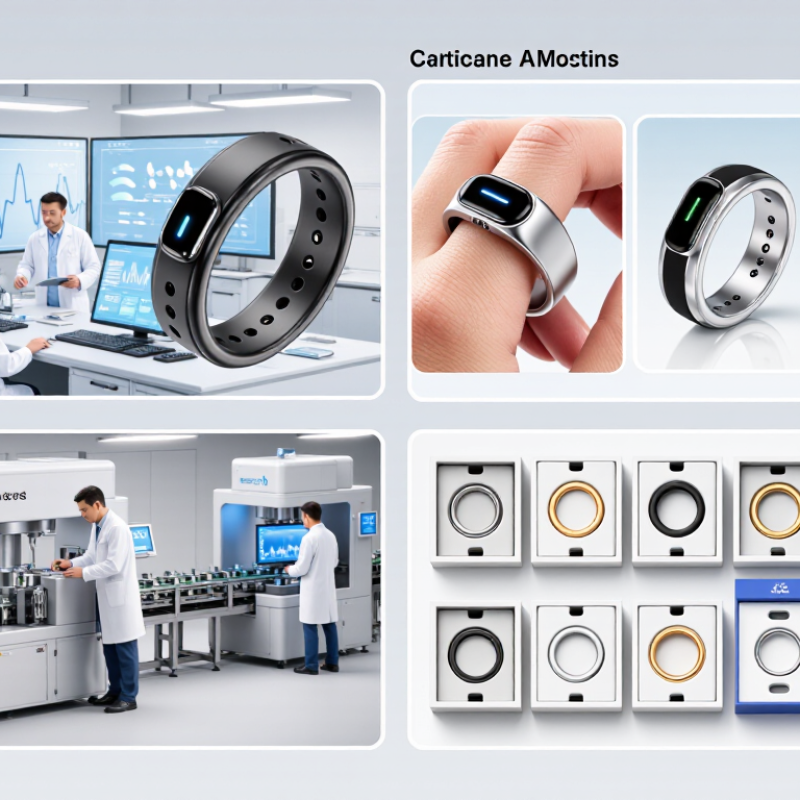
Smart rings sit at the intersection of wearable electronics, materials engineering, and personal health tracking. Their small housings must fit sensors, batteries, antennas, and charging contacts without becoming uncomfortable. That leaves little room for error. Manufacturers coordinate industrial design, precision molding, surface finishing, firmware development, and production checks. A capable supplier can describe how it evaluates sizing consistency, water resistance, battery life, and sensor performance across batches. No single metric tells the whole story. Buyers should test samples during ordinary routines, such as typing, washing hands, and sleeping, rather than judging them only under showroom lighting.
The industry relies on more than ring makers alone. Component suppliers provide sensors and miniature power systems, while contract manufacturers may handle assembly and quality control. Distributors and technology partners help products reach different markets and connect with companion apps. Global buyers can compare suppliers by examining production capacity, communication practices, software support, and the clarity of their testing records. Ask how a supplier handles size exchanges and product changes between sample and mass production. These details can reveal operational strengths. Yet specifications may still look better on paper than in daily use, so independent checks remain worthwhile. Industry standards and expectations also differ by market, making clear documentation important.
Leading smart ring manufacturers combine compact electronics, reliable production, and disciplined testing. A ring must fit comfortably while housing sensors, a battery, and wireless components. That leaves little room for design errors. Strong engineering teams test different sizes, skin-contact materials, and sensor placements before scaling production. They document calibration methods and check readings during movement and temperature changes. Results should be presented carefully; a consumer ring is not a substitute for clinical assessment.
Manufacturing capability matters just as much. Buyers can ask about prototype lead times, production capacity, component traceability, and inspection records. Skilled suppliers should explain how they check battery performance, water resistance, charging consistency, and firmware updates. Clear communication matters, too. It can surface problems early, though even experienced teams may underestimate tooling changes or app integration time. That deserves scrutiny.
Tips: Request samples from more than one production batch. Compare fit, charging, and data stability over several days. Ask for test criteria in writing, and confirm how defects are handled. Small details matter. Review privacy safeguards and support timelines before placing a large order; vague answers are a warning sign.
Choosing a smart ring manufacturer means looking beyond a polished prototype. Ask how the factory controls dimensions, battery assembly, and sealing between production batches. Small details matter. A slight change in inner diameter can affect comfort and sensor contact. Materials should be documented, including the metal alloy, coating, adhesive, and skin-contact surfaces. Request material specifications and applicable test reports, rather than relying on broad claims such as “hypoallergenic.”
For electronics, ask how the supplier checks restricted substances and prepares market-specific compliance documents. Requirements can vary by destination, so confirm details with qualified local advisers.
Quality control should cover incoming parts, assembly, and finished rings. Ask for written inspection criteria, calibration records, and sample test results. Useful checks may include water-resistance testing, charging performance, sensor consistency, and repeated wear simulations. Ask how defects are logged and what happens when a batch fails. A certificate alone is not enough. It may describe a management system, not prove every ring performs as expected. Compare production samples with the approved reference, and request traceable batch records. No checklist catches everything; that is easy to forget. Even a careful audit offers only a snapshot, so maintain clear communication and review quality data over time.
Global buyers should compare smart ring suppliers beyond catalog claims. Technology is the first filter. In practical sampling, sensor stability, skin contact, battery endurance, and app synchronization matter more than decorative finishes. A ring may advertise multiple health metrics, yet poor calibration can weaken customer trust. IDC reported 537.7 million wearable devices shipped worldwide in 2024, showing strong demand but also intense competition. Smart ring suppliers must prove performance through repeatable testing, not attractive specifications.
Scale changes purchasing risk. Larger manufacturers usually offer stronger component sourcing, automated inspection, and better production continuity. However, high output does not guarantee flexible service. Smaller factories may adjust ring sizes, charging cases, firmware interfaces, or packaging faster. Counterpoint Research has identified smart rings as a fast-growing wearable category, but market estimates differ because suppliers report products inconsistently. That gap deserves attention. Ask for monthly capacity, defect rates, sample approval records, and production lead times.
Customization should be measured carefully. Real customization includes sensor layouts, materials, software language, data dashboards, and regional packaging. Request a pilot batch before committing to large volumes. Check whether the supplier can maintain color accuracy and charging performance across hundreds of units. A perfect sample proves little. The stronger supplier documents revisions, explains technical limits, and accepts reasonable testing feedback. This is where many comparisons become less comfortable, but more reliable.
Evidence-based comparison guide: Public product specifications can indicate technology capability, but manufacturing capacity and customization terms should be verified directly with each supplier.
| Comparison Dimension | What Is Commonly Available in the Market | What Buyers Should Compare | Verification for Supplier Selection |
|---|---|---|---|
| Health-sensing technology | Consumer smart rings commonly combine optical sensors for pulse-related measurements with motion sensors. Skin-temperature sensing is also used in some products; available measurements differ by model. | Sensor types, measurement frequency, supported metrics, data quality documentation, and performance across different skin tones and activity conditions. | Request test protocols, validation results, sensor specifications, and a live demonstration. Do not treat wellness measurements as medical diagnoses unless the product has the relevant authorization. |
| Motion and sleep tracking | Accelerometers are widely used to detect movement and support activity or sleep-related estimates. Algorithms and reported metrics vary between products. | Supported activity categories, sleep-stage methodology, data export options, and how the supplier handles updates to tracking algorithms. | Compare results against a consistent test plan and ask which measurements are directly sensed versus algorithmically estimated. |
| Connectivity and software | Bluetooth Low Energy is commonly used for communication between rings and mobile devices. Data synchronization and app compatibility are product-specific. | Supported mobile operating systems, Bluetooth implementation, API availability, localization, cloud dependence, and software-update policy. | Test pairing and synchronization on target devices. Confirm API documentation, data ownership, security practices, and the duration of software support. |
| Battery and charging | Published battery-life figures vary by ring, usage pattern, sensor sampling, and software settings. Small ring form factors limit battery capacity compared with larger wearables. | Runtime under defined settings, charging time, charger type, battery-aging behavior, and whether charging accessories can be customized. | Request test conditions behind any runtime claim and evaluate battery performance during a representative multi-day usage trial. |
| Water resistance and durability | Water-resistance ratings differ across products. An IP rating and an ATM rating use different test systems and should not be treated as interchangeable. | Declared rating, test standard, exposure limitations, coating durability, scratch resistance, and warranty exclusions. | Obtain the test report for the exact finished design. Confirm whether the rating applies after surface finishing and production assembly. |
| Materials and fit | Smart rings are offered in materials such as metal alloys and polymer-based components. Size ranges and internal dimensions are not standardized across suppliers. | Material composition, skin-contact compatibility, finish options, size coverage, weight, and availability of a sizing kit. | Review material declarations and physical samples. Validate fit using the supplier’s sizing process rather than assuming standard ring sizes are equivalent. |
| Manufacturing scale | Comparable factory capacity, annual output, and utilization figures are not consistently disclosed in public product information. | Monthly capacity for the proposed design, current utilization, production sites, yield history, lead times, and contingency planning. | Request capacity evidence, a production-process overview, quality records, and—where appropriate—a factory audit. Distinguish demonstrated output from target capacity. |
| Customization options | Customization may range from packaging and exterior finishes to hardware, firmware, mobile applications, and data integrations. Availability is supplier- and project-specific. | Tooling requirements, minimum order quantities, engineering fees, customization lead time, ownership of custom designs, and access to software interfaces. | Obtain a written scope covering deliverables, intellectual-property rights, acceptance criteria, change control, and support after launch. |
| Compliance and shipping | Market-entry and transport requirements depend on destination, radio equipment, battery configuration, product claims, and sales channel. | Applicable radio, chemical, product-safety, privacy, and battery-transport requirements for each destination market. | Request current reports and declarations for the exact product configuration. Verify destination-specific obligations with qualified compliance specialists. |
| Commercial readiness | Published consumer features do not establish a supplier’s OEM readiness, service level, or ability to support long-term orders. | Sample and production lead times, warranty terms, spare-part policy, order flexibility, payment terms, and post-sale technical support. | Use a documented request for quotation and pilot order. Confirm service commitments and escalation contacts in the supply agreement. |
Note: The table summarizes market-level considerations, not independently verified rankings or factory-specific claims. Request current, product-specific evidence before making sourcing decisions.
Top Smart Ring Manufacturers for Global Buyers
Global buyers should evaluate smart ring manufacturers beyond price and polished product photos. Request a factory profile, production capacity, audit records, and recent export references. Ask for evidence. A dependable supplier should explain sensor accuracy, battery performance, charging cycles, and expected product life in clear technical documents. Samples should match mass-production specifications, including ring size, weight, finish, and packaging.
Import requirements vary by destination. Confirm radio-frequency approvals, battery transport documents, labeling rules, and data privacy responsibilities before placing an order. The supplier should provide test reports from recognized laboratories, not screenshots with unclear dates. Check the HS code with a qualified customs adviser. Small details matter. A missing warning label or incorrect carton mark can delay clearance and increase storage costs.
Commercial terms also need careful review. Compare minimum order quantities, tooling fees, sample charges, lead times, payment stages, warranty coverage, and replacement procedures. Ask how defective units are recorded and resolved. A factory inspection can verify assembly lines, incoming material checks, final testing, and stock control. However, inspections have limits. They cannot predict every software issue or seasonal delay. Buyers should use a written quality agreement with measurable standards, such as charging time, Bluetooth stability, water-resistance testing, and acceptable defect rates. Some suppliers promise customization too quickly. That should invite questions, not excitement. Clear communication, traceable documents, and realistic production schedules usually create safer long-term sourcing decisions.
Review sizing consistency, sensor performance, battery life, water resistance, and production capacity. Request samples from multiple production batches. Paper specifications can still disappoint during sleep or handwashing.
Test the ring while typing, washing hands, charging, and sleeping. These routines reveal comfort, sensor contact, and data stability. Showroom lighting proves very little.
Ask for inspection criteria, calibration records, defect logs, and traceable batch information. Confirm how failed batches are handled. A certificate alone proves limited performance.
Request details about the metal alloy, coating, adhesive, and skin-contact surfaces. Review applicable material tests and market requirements. “Hypoallergenic” alone is too vague.
Ask how readings are checked during movement and temperature changes. Compare results across sizes and batches. A consumer ring is not a clinical assessment.
Ask about battery testing, charging consistency, and repeated-use performance. Test charging contacts after several days. Small charging problems become annoying quickly.
Confirm firmware update plans, companion app support, privacy safeguards, and response timelines. Ask what happens after product changes. App integration may take longer than expected.
Requirements differ by destination market. Ask for relevant compliance documents and restricted-substance checks. Confirm details with qualified local advisers before placing large orders.
Compare communication, prototype timing, production capacity, testing clarity, and defect handling. Request written answers. One supplier may look stronger until daily testing begins.
This article explores the global Smart Ring industry and the different roles manufacturers play in bringing connected wearable devices to market. It outlines the capabilities buyers may look for, including product design, sensor integration, software compatibility, production planning, and the ability to support both standard and customized orders. It also explains why manufacturing standards, material selection, durability testing, and consistent quality control matter when evaluating a supplier.
For global buyers and importers, comparing manufacturers involves more than checking production scale. Technology readiness, customization options, communication, lead times, and quality assurance can all influence whether a supplier is a suitable long-term partner. By considering these factors together, buyers can make more informed sourcing decisions and better match a manufacturer’s strengths to their product requirements, target markets, and expected order volumes.